How to build a discipleship pathway from scratch
Every church intends to make disciples. Few build the pathway. Here's how to start.
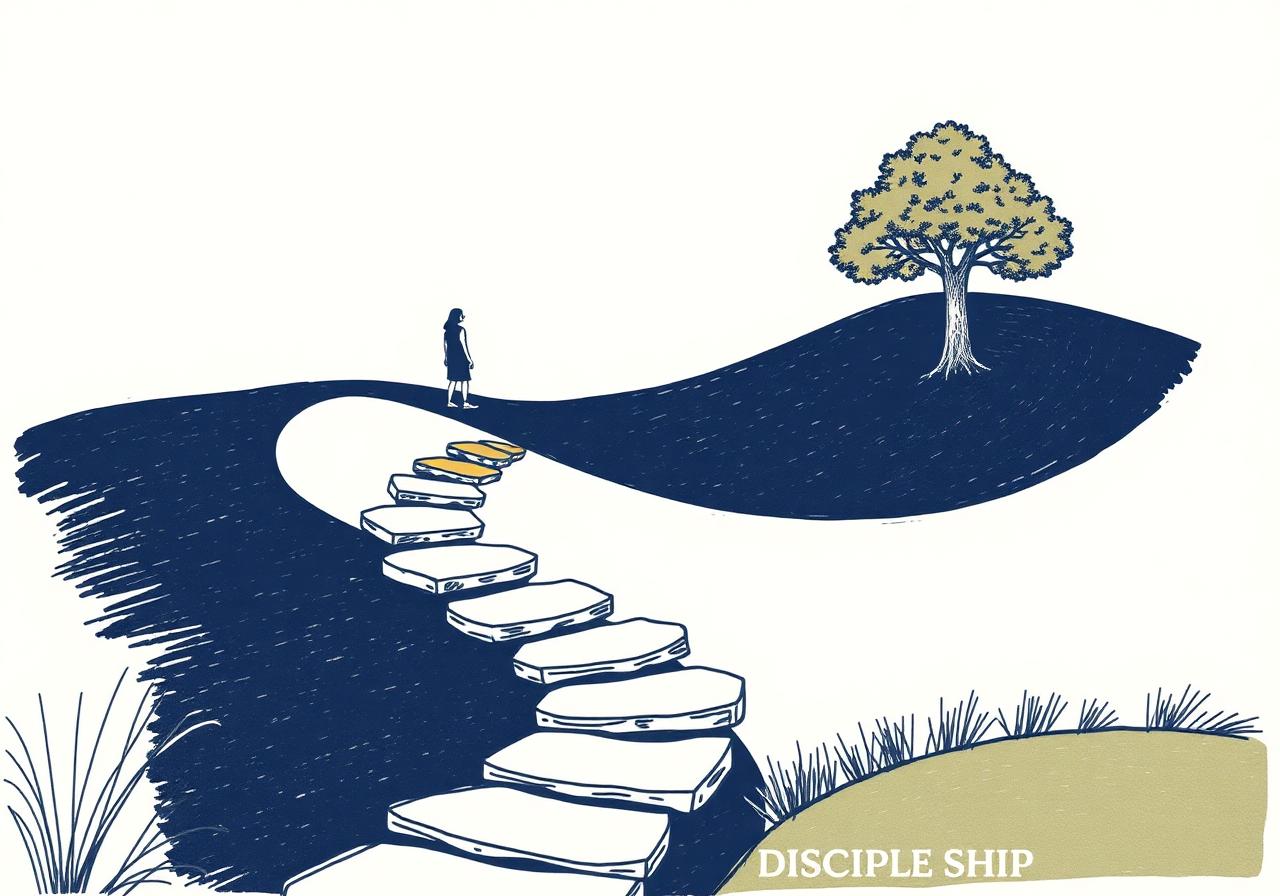
A discipleship pathway is the answer to a simple question asked from the front door: what happens next? Most churches answer "come on Sunday and see what unfolds." That is hospitality. It is not a pathway.
Four stations, named honestly
1. Exploring
A person who is curious but not committed. A safe entry course. Permission to ask anything. No pressure to belong, no test of orthodoxy. Three to six weeks, light commitment.
2. Belonging
A person who has chosen the church. Membership, small group, baptism preparation. The work here is relational: who knows them, who prays for them, who notices when they don't show up.
3. Maturing
A person growing in depth. Theological reading, spiritual disciplines, examined life. This stage is where most churches under-invest. People plateau because there is nothing past basics.
4. Sending
A person who leads, serves, plants, or goes. Training, commissioning, accountability. Without a fourth stage, the third becomes a holding pattern.
How to start
- Name the stations. Yours might be different. Name them anyway.
- Identify one course or rhythm per station. Just one. Resist the urge to over-engineer.
- Make the transition visible. A person should know which station they're at.
- Assign a human to each. A pathway without people is a flow-chart.
- Review every six months. Pathways calcify. Keep yours alive.
What you're really building
Not a funnel. A staircase. A funnel narrows; a staircase ascends. The question is not "how do we get more people in" but "how do we help the people we already have go further".